
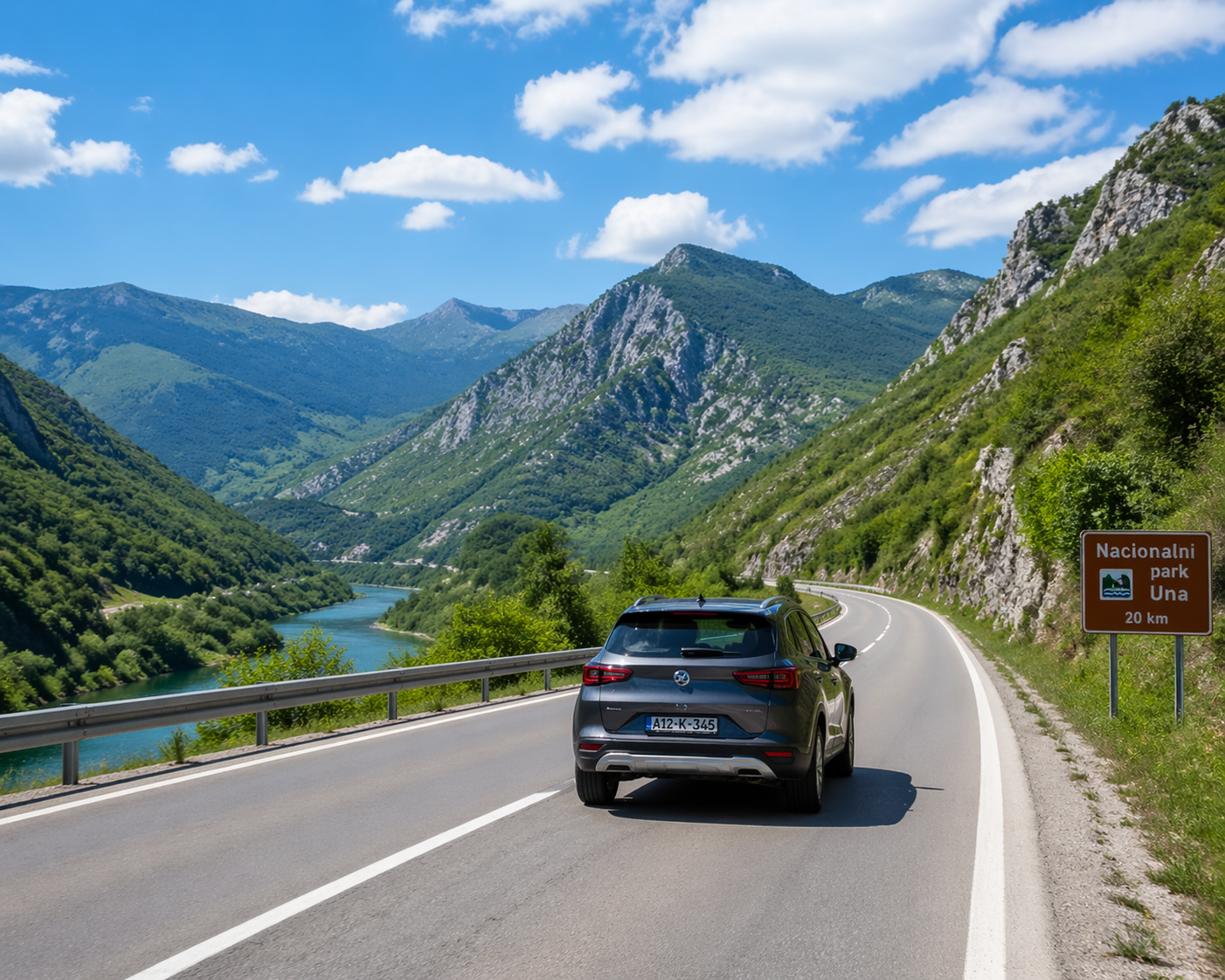
Is It Safe to Drive in Bosnia? A 2026 Guide for Tourists
Yes, driving in Bosnia is safe and beautiful. Road conditions, mountain tips, speed limits and what to know before you rent, from a local team.
Yes, driving in Bosnia and Herzegovina is safe, and it is the best way to see the country. The roads are well maintained and the police are fair with tourists; you just need to adjust to mountain roads and a livelier local driving style. This guide covers exactly what to expect, the rules that catch visitors out, and how to enjoy the drive stress-free.
If it is your first Balkan road trip, you have probably read forum comments about "crazy drivers," winding mountain roads and strict police checks. Let's clear that up. Driving here is perfectly safe, it simply has its own rhythm, and once you know the few things below, renting a car is easily the best decision you'll make.
What are the roads in Bosnia actually like?
Bosnia is a mountainous country, which means stunning scenery and a specific kind of driving. There are modern motorway sections, mainly around Sarajevo and south from Mostar, with toll booths that take convertible marks (KM), euros or card. But most of your trip will be on main regional roads (magistralni putevi), single lane in each direction, generally in good condition but full of bends, climbs and villages. The golden rule: do not trust Google Maps time estimates. Behind slow trucks on mountain roads, 100 km can easily take nearly two hours, so never plan a tight schedule.
The Balkan driving style: what to expect
Local drivers are the biggest surprise for most tourists. The pace is faster and more assertive than in much of Western Europe, and you'll see bold overtakes and some tailgating if you drive slowly. Your job is simple: stay calm. If someone wants to pass, ease right and let them. Drive defensively and you'll be fine. With a fully insured rental from us, even a minor mishap is nothing to worry about.
City driving and parking
On the open road the challenge is the bends; in cities like Sarajevo and Mostar it is space. These cities sit in narrow valleys, old-town streets are tight, and pedestrians cross where you least expect. The key tip is to plan where you'll park before you arrive, because enforcement and the tow truck are fast. Our guide to parking in Sarajevo shows exactly where to leave your car safely and cheaply.
Police, speed cameras and speed limits
Police checks are common and the country is well covered by fixed and mobile speed cameras. Limits are enforced: 50 km/h in built-up areas, 80 km/h on open roads, and 130 km/h on the motorway. There is an official tolerance of about 10 km/h. And there's an unwritten Balkan courtesy: if oncoming drivers flash their headlights, they're warning you of a police radar just ahead, so check your speed.
Strict rules that catch tourists out
Police are generally fair with visitors, but on a few rules there is no flexibility:
Headlights on during the day. Dipped headlights are required 24 hours a day, all year, even in summer. This is the rule tourists forget most.
Zero tolerance for alcohol. The limit is 0.03%, effectively nothing. If you're driving, don't drink at all.
Winter tyres. From 1 November to 1 April they're mandatory by law, whatever the weather. When you book with us, winter tyres are included in the price with no surcharge.
What to do if you get a fine
If you're fined, never offer money directly to an officer, that is treated as bribery. The officer issues a penalty slip you pay at a post office or bank. Bosnia has a helpful rule: pay within 8 days and you pay only 50% of the amount. Never leave the country with an unpaid fine, the system is connected and border police will stop you.
Can you cross the border with a rental car?
Yes, and it's routine. Many visitors pick up in Sarajevo and drive to Split, Dubrovnik or Kotor. The main thing to arrange in advance is the rental company's approval for cross-border travel, which we sort for you when you tell us your destination countries. Unlike big chains that add expensive cross-border fees, we keep it transparent. See our full cross-border driving guide.
So, is it worth renting a car?
Absolutely. Public transport in Bosnia is slow and limited outside the main cities, and it won't take you to the hidden villages, mountain lakes and old fortresses. Driving yourself is the only real way to see the country. Once you have the keys, read our Sarajevo to Mostar guide.
Frequently asked questions
Is it safe to drive in Bosnia as a tourist?
Yes. The roads are maintained and police are fair with visitors. Just adjust to mountain roads and a faster local pace, keep your headlights on, and don't rush your schedule.
Are the roads in Bosnia paved and in good condition?
Yes, main roads are paved and generally well maintained. Most are single-lane mountain roads with bends and climbs, so allow more time than the map suggests.
Do I need a 4x4 to drive in Bosnia?
No. A normal car is fine for all the main routes and towns. An automatic is comfortable on the winding roads, and an SUV helps if you're carrying a family and luggage.
Is it safe to drive from Sarajevo to Mostar?
Yes, it's one of the most popular and scenic drives, about 2 to 2.5 hours on a good main road. Take your time on the bends and enjoy the views.
Do I need to keep my headlights on during the day in Bosnia?
Yes. Dipped headlights are legally required 24 hours a day, all year round. It's the rule visitors are fined for most often.
By Hamza Kanuric, Platinium Cars, Sarajevo.